Kashmiri Breads: A Guide to the Kandur and the Bakery Counter
Kashmiris buy fresh bread twice a day. Girda, lavasa, kulcha, bakarkhani, sheermal and tsochvoru: what each one is, when it is eaten and how to order.
Free trip plan
Plan your Kashmir trip with a local expert
Get a custom itinerary and price. We call you back fast.
In this guide ▼
Quick answerKashmir's breads come from the kandur, the neighbourhood baker with a clay oven. Mornings mean girda (round, dimpled) and lavasa (thin flatbread); afternoons mean crisp kulcha, flaky bakarkhani, sweet sheermal and sesame-topped tsochvoru. All are best with a cup of noon chai.
In Kashmir, the day begins with the kandur. Before sunrise, the baker's oven is already hot, and someone from almost every house walks over to collect warm bread for breakfast. By mid-afternoon the same counters fill with crisp tea-time breads. It is one of the most sociable rituals in the valley, and a lovely one to join.
The kandur
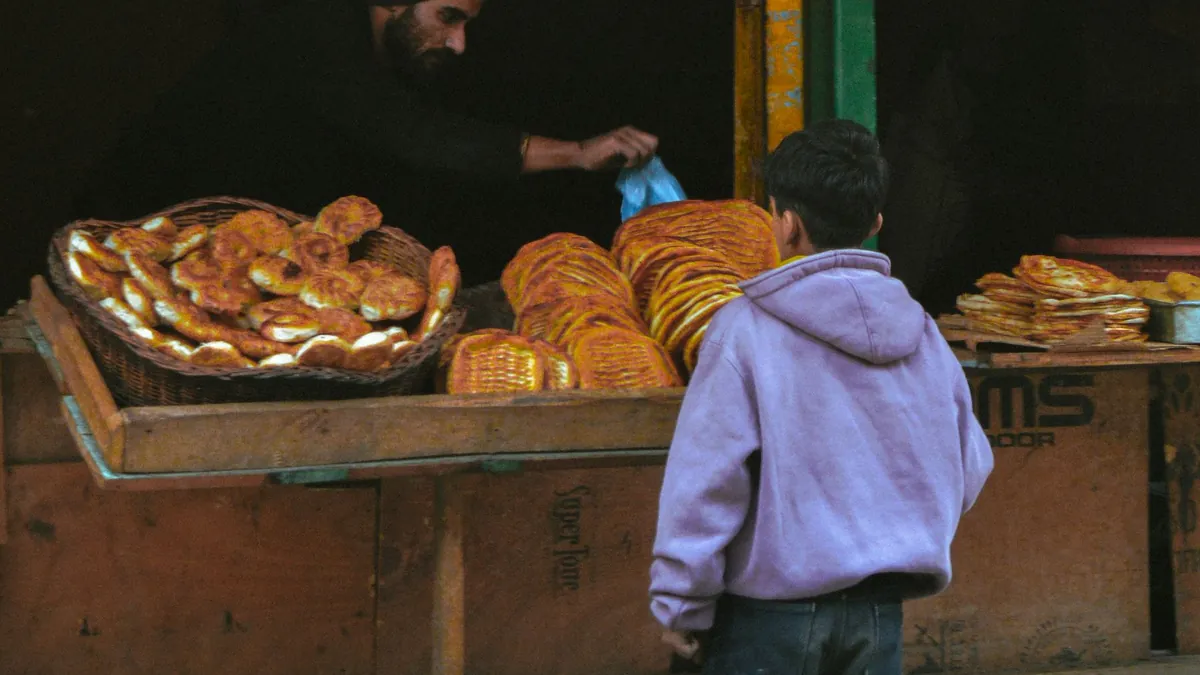
A kandur is a traditional baker who works at a large clay oven, slapping dough onto its hot walls. Kandur shops are neighbourhood meeting points, especially in the mornings and in winter, when the warm oven draws a small crowd.
Morning breads
| Bread | What it is |
|---|---|
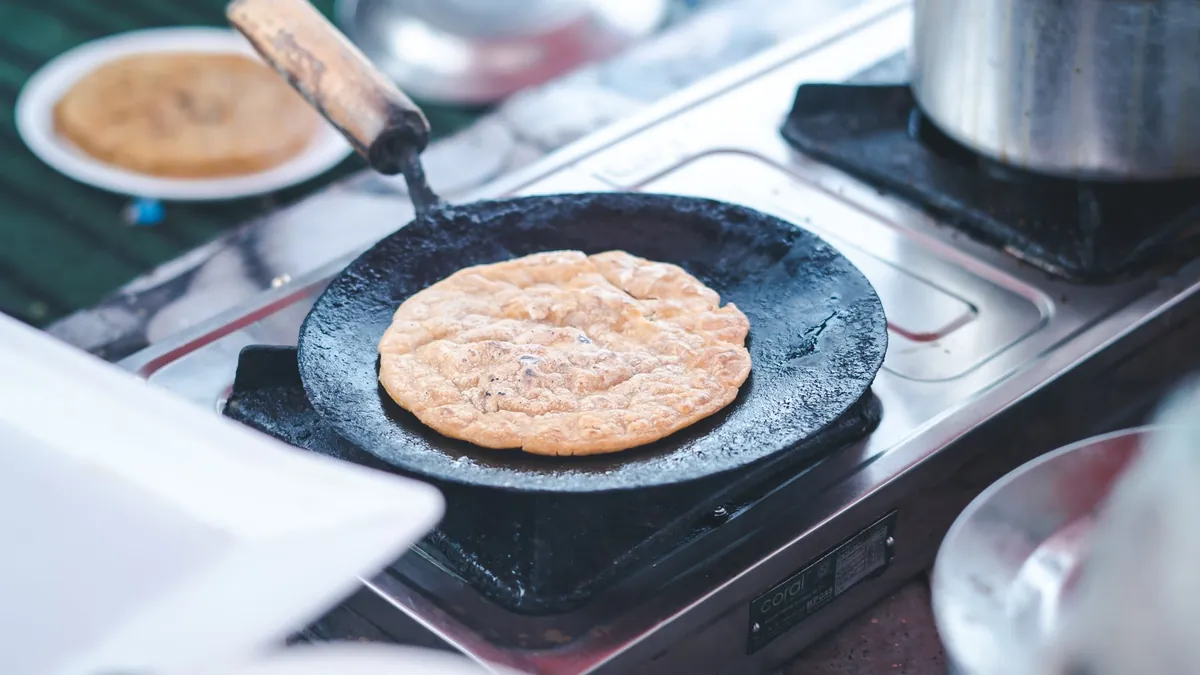
| Girda | A round, soft bread with a crisp top, pressed with fingertips into a dimpled pattern. The everyday breakfast bread. |
| Lavasa | A thin, unleavened flatbread, often eaten with butter or folded around kebabs. |
| Tsot | A small round bread, eaten with butter and tea. |
Tea-time and special breads
| Bread | What it is |
|---|---|
| Kulcha | Small, crisp, biscuit-like breads, often topped with poppy seeds; salty or sweet versions exist. |
| Bakarkhani | A flaky, layered bread, sometimes lightly sweet, popular at weddings and with tea. |
| Sheermal | A soft, slightly sweet bread enriched with milk and often saffron. |
| Tsochvoru | A round, bagel-like bread topped with sesame seeds. |
| Katlam | A rich, flaky bread for special occasions. |
How to enjoy them
- Go early: girda sells out fast in the morning.
- Pair girda or lavasa with butter and noon chai at breakfast.
- Pick up kulcha or bakarkhani for the afternoon, with tea or kahwa.
- Ask your houseboat or hotel to bring fresh kandur bread for breakfast; most will happily oblige.
- Prices are modest, and kandurs are used to visitors pointing and asking.
Modern bakeries
Srinagar also has well-known modern bakeries selling cakes, cookies and pastries alongside traditional breads, popular for gifts and evening treats. For more local food, see what to eat in Kashmir.
Plan the rest of your Kashmir trip
- Srinagar Old City Walk: A self-guided walk through Srinagar's old city (Shehr-e-Khaas): Jamia Masjid, Khanqah-e-Moula, Jhelum bridges, spice markets and old wooden houses.
- Kashmiri Wazwan: A wedding-sized banquet of slow-cooked lamb, shared from a copper platter.
- Srinagar in Winter: Srinagar's coldest 40 days have their own rituals: pherans, kangris, harissa at dawn and snow on the houseboats.
Frequently asked questions
What is a kandur?
A traditional Kashmiri baker who bakes breads in a large clay oven, usually serving a neighbourhood.
What do Kashmiris eat for breakfast?
Fresh breads like girda or lavasa from the kandur, with butter and noon chai.
What is the difference between kulcha and bakarkhani?
Kulcha is a small, crisp, biscuit-like bread; bakarkhani is flaky and layered.
Where can I buy Kashmiri bread?
At kandur shops across Srinagar, early in the morning for breakfast breads and in the afternoon for tea-time breads.
Still have questions about your Kashmir trip?
Our Srinagar-based team answers on WhatsApp, usually within minutes.